
What Is Childhood Emotional Neglect? Understanding the Invisible Wound
Sometimes, it’s not what happened that causes the wound. It’s what didn’t happen. If you struggle to emotionally connect and trust others or if you tend to opt for extreme self-reliance over asking for help, Childhood Emotional Neglect may be part of your story.
In this article, we'll explore what Childhood Emotional Neglect is, how it can deeply shape our relationships with ourselves and others, and, perhaps most importantly, how healing can begin through reconnecting and reparenting the parts of ourselves that long to be acknowledged.
What is childhood emotional neglect?

Childhood Emotional Neglect, also known as CEN, is a caregiver’s ongoing failure to notice, meet, or validate a child’s emotional needs. It’s a form of relational absence that is centered around dismissive behavior, lack of safe, reassuring affection, and psychological disregard. Unlike physical abuse or active mistreatment, emotional neglect is an act of omission and encompasses what does/did not happen at home.
Childhood Emotional Neglect is one of the most overlooked and misunderstood forms of relational trauma, because it’s hard to identify the ‘lack’ of something when the absence of it was a normal experience. It’s especially hard for an adult child to acknowledge the ‘lack’ when the parents involved were full of genuine love and good intentions.
But as Jonice Webb says, “The truth is, to love your child is a very different thing from being in tune with your child.”
In other words, a loving parent may be physically present and also emotionally distant. They can love, without connecting. They may sincerely care, but still emotionally abandon their child in overwhelming moments.
Common examples of Childhood Emotional Neglect can include…

Ignoring or even punishing emotional distress such as anger, fear, and sadness.
Example: Being told, “You’re too sensitive… stop crying … there’s nothing to be upset about.”Not offering attuned comfort, validation, or encouragement after a difficult or frightening moment.
Example: Failing to notice and celebrate a child’s wins or connect meaningfully in pivotal moments.Withholding safe affection.
Example: Rarely or never giving hugs, saying “I love you,” only offering positive affirmation following a ‘good’ performance, or only offering affection as a reward for meeting an expectation.Being emotionally unavailable and detached from the child’s inner life.
Example: Only surface-level talks. Never asking about friends, fears, dreams, confusing/uncomfortable topics, etc.Focusing entirely on the adult’s own stress while neglecting the child’s reality.
Example: Making everything about the parent.
Understanding the origin of emotional neglect
How emotional neglect happens
Emotional neglect isn't always the result of unloving parents. Well-intentioned families and deeply loving parents can love their children and still miss the mark. Most often, emotional neglect is often rooted in…
The parent’s unhealed attachment wound
The parent’s own emotional immaturity
Attachment wounds and generational patterns
Emotional neglect is often linked to a parent’s attachment style and/or generational trauma. Even with genuine love and the best intentions, if a parent has unresolved wounds, they can inadvertently leave the child feeling unseen, misunderstood, and emotionally alone. Emotional neglect tends to follow a generational pattern, and children who are raised by emotionally unavailable parents are more likely to have a similar parenting style with their own children.
Learn more: The tragic conflict – How to break the cycle of generational trauma
How emotional immaturity can lead to emotional neglect
Children depend on emotionally available caregivers to help them regulate their emotions and make sense of their inner world. But if the parents are not emotionally mature and don’t know how to regulate their own emotions or navigate healthy, mature relationships, then it’s harder for them to be emotionally present for their children. As a result, they may unintentionally dismiss, minimize, overlook, or even punish the emotional needs of the child, leaving the child to navigate difficult feelings and life experiences without the support they need.
Learn more: Understanding emotional immaturity in adults – Why age does not equal maturity
The hidden grief of emotional scars

Parents might have met physical needs and provided basic care, but if a child’s emotional needs are treated as invisible or irrelevant, that can leave a hard-to-name emotional scar on the child’s sense of self.
For individuals who grew up with emotional neglect, it can be very difficult to acknowledge the intense sadness and hidden grief around what wasn’t there, because doing so requires admitting that comfort wasn’t offered. Attunement was missing. Emotions weren’t acknowledged. And admitting those realities can cause a complex emotional upheaval – and the child may find the preemptive internal and relational fallout too overwhelming to face.
“When you’re going through a breakdown, a good question to ask is what is actually breaking down. We usually think it’s our self. But what’s typically happening is that our struggle to deny our emotional truth is breaking down. Emotional distress is a signal that it’s getting harder to remain emotionally unconscious. It means we’re about to discover our true selves underneath all that story business.” ― Lindsay C. Gibson, Adult Children of Emotionally Immature Parents: How to Heal from Distant, Rejecting, or Self-Involved Parents
The lasting impact of emotional neglect
Childhood Emotional Neglect leaves a painful imprint on our childhood – one that often shapes the way we step into adulthood and navigate relationships. If your emotional needs consistently went unnoticed (or punished) as a child, you may have difficulty launching into healthy adult independence or embodying emotional maturity in your adult relationships.

On one end of the spectrum, some people who experienced emotional neglect may grow up to be hyper-independent and may struggle to form healthy attachments and trust others. On the other end, some people become codependent and unknowingly repeat emotional patterns of self-neglect in order to achieve or ‘earn’ the relational connection they’ve always wanted.
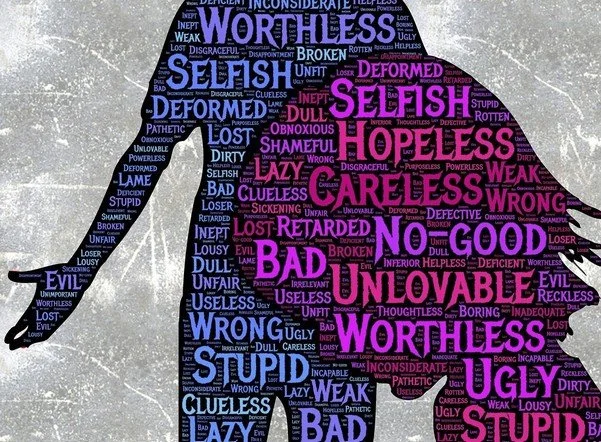
But on both sides, the core hurt of Childhood Emotional Neglect is a lingering sense of unworthiness. The question the mind (often subconsciously) wrestles with is, “Why weren’t they there for me?” And all too often, the answer comes in the form of an internalized, wounded belief – that their needs either ‘don’t matter’ or aren’t ‘important enough’ to warrant the care or involvement of others.
Healing begins when we acknowledge the invisible wound, reconnect with our emotional needs, and compassionately reparent ourselves – and the Adult Chair Framework offers this type of path forward.
How to heal from childhood emotional neglect
Through the Adult Chair lens
Healing from Childhood Emotional Neglect begins not by blaming our parents, but by caring for and reparenting the wounded Inner Child, identifying the pattern, and choosing to compassionately break the cycle.

Caring for the Inner Child through self-attunement and reparenting
The Inner Child is where our earliest emotional experiences and unmet core needs are stored. When a child's emotions are repeatedly dismissed, overlooked, or unsupported, the Inner Child may develop beliefs such as, "My feelings don't matter," "I'm too much," or "I have to handle everything on my own."Reparenting a wounded part of us involves full self-attunement – staying with that feeling instead of avoiding or numbing the discomfort. We observe the internal state, notice the feeling without judgment, and then respond with care by offering our emotional presence and compassion.
Understanding the story and identifying the pattern
Once we address the wound, we look for the protective patterns that might have emerged as a response to the unmet need. Because without access to our Healthy Adult, our Inner Adolescents may have unintentionally struggled to provide the consistent emotional attunement the Inner child needed. With compassionate introspection, we ask ourselves: “In what ways have unresolved wounds led to people-pleasing, perfectionism, emotional avoidance, codependence, hyper-independence, or a need for control?”Choosing to compassionately break the generational cycle
Until the Healthy Adult shows up and interrupts these protective patterns, we may repeat the cycle into Adulthood. But once the grounded Healthy Adult takes the lead, we can recognize our wounded parts with compassion, meet the emotional needs that once went unmet, and begin rewriting the beliefs that no longer serve us.
The bottom line

Processing the reality of Childhood Emotional Neglect can understandably trigger deep emotions such as confusion, grief, or even anger. As you do the work to become the type of person who can give what you did not receive, having a grounded, trauma-informed, attachment-based therapist/coach can be highly beneficial, where we gently and compassionately explore ways to deepen authentic self-awareness and emotional maturity.
Through personal growth and true conscious living, it is possible to transform wounded dynamics, renegotiate response patterns, and alchemize past pain. If you’re interested in exploring a grounded approach to healing from emotional neglect and reparenting your Inner Child, I invite you to reach out and schedule a complimentary 20-minute discovery call. This no-obligation, zero pressure time allows us to meet, get your questions answered, and determine if working together is the next right step for you.
Let’s Connect
Hi there! I’m Jenny Jansen, a Licensed Therapist (LISW-CP) and Certified Adult Chair Master Coach based in South Carolina with over 10 years of experience. License number: 11692 I combine both therapy and coaching methodologies to provide my clients with a holistic perspective and the techniques they need to flourish. Rediscovering who you were always meant to be is an act of courage, and radical self-love can turn unconscious paralysis into conscious, authentic growth. Learn more about me here.