
The Anxious-Avoidant Attachment – Why they attract & How to Heal
Chances are you’ve heard about the dynamic duo that is the ‘anxious-avoidant relationship.’ These two attachment styles get a reputation for good reason – because when someone with an avoidant attachment style syncs up with an individual with an anxious attachment style, the relational dance that ensues is… intense. For many reasons.
When these two individuals collide in a relationship, it’s like yin and yang. They both feel a strong draw for the other, partly because the avoidant partner can feel so steady while the anxious partner can seem so open. But ultimately, the attraction is powerful due to the familiar spark that keeps them chasing and withdrawing.
In this article, we’re going to explore why. We’ll dive deep into the anxious-avoidant relationship dynamic to understand how these two styles interact with each other. But first, let’s start with a brief overview of how each attachment style works.
What is the anxious attachment?

Someone with an anxious attachment has intense desire for relational security and connection – which drives them to seek out constant reassurance and emotional validation. Common anxious attachment characteristics include:
Hypervigilance: Overanalyzing communication, situations, and body-language
Fear of being alone: Self-doubt and worry that they care more about the relationship than the other
Low self-worth: Self-abandonment, insecurity, and putting other’s needs first
Relational fear: Seeking emotional security through people-pleasing and codependency
What is the avoidant attachment?

An individual with an avoidant attachment also craves meaningful, relational connection, but their desire is marked by a strong fear of emotional intimacy. As a result, they crave connection… but they also long for independence and have a tendency to pull away and create distance whenever a relationship feels too close or demanding. Common characteristics of the avoidant attachment style include:
Hyper-independence: Refusing emotional support, difficulty asking for help, and relying on oneself.
Emotional distance: Avoidance of deep vulnerability and a preference to keep others at an arm’s length.
Withdrawing during conflict: Withdraws physically and emotionally during conflicts and shuts down or refuses to engage in emotionally strenuous interactions.
Intellectualizing feelings: Subconsciously dismisses, invalidates, or suppresses feelings or distracts them with overly ‘positive’ rationalizing.
Anxious attachment vs Avoidant Attachment
| Anxious Attachment | Avoidant Attachment | |
|---|---|---|
| Thoughts |
|
|
| Emotions | Constant fear of abandonment, betrayal, rejection, and loneliness. Deep shame or feeling like they’re ‘too much.’ High anxiety and separation anxiety. | Extremely uncomfortable with heavy emotions and vulnerability and feels trapped, suffocated, and/or controlled by emotional demands. Deep underlying fear of being inadequate or criticized. |
| Behaviors | Clinging, over-calling, seeking reassurance, people-pleasing, codependency, mood monitoring, hypervigilance, suppressing/abandoning personal boundaries to keep the peace. | Preference for hyper-independence and numbing emotions through distractions and perfectionism. |
The origin of the anxious-avoidant attachment dynamic
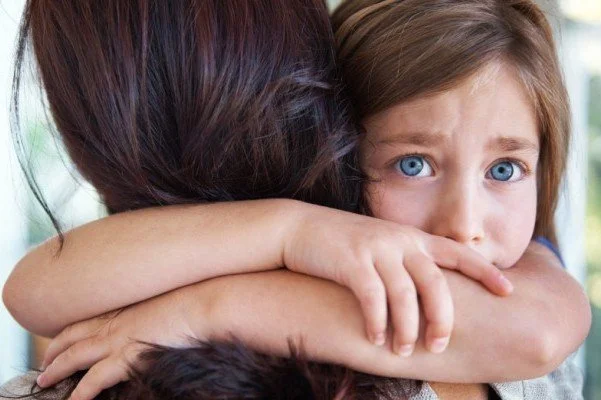
As children, both asked the subconscious question: “Who or what do I need to become in order to be accepted and loved?” But they each developed different answers and different response patterns based on their circumstances.
Anxious attachment styles are typically developed in childhood as a result of unpredictable and/or inconsistent caregiving. If a child’s caregivers vacillated between warm and attentive and distant, harsh, or emotionally unavailable, the result is an individual who struggles to feel emotional security in a relationship.
Avoidant attachment styles are often formed when parents or guardians were emotionally distant, rejecting, or unresponsive to a child’s distress, forcing the child to learn self-reliance. Someone with an avoidant attachment style learned early in life that expressing needs or seeking comfort leads to disappointment or rejection, and as a result, they learned to suppress their needs in order to stay safe.
Learn more: Understanding the invisible wound of emotional neglect
Why anxious/avoidant people attract each other
Both the anxious and avoidant attachment styles represent learned survival responses rooted in childhood wounds, ones that continue to play out in relationships as we get older. Especially in romantic adult relationships where the stakes are high and a certain degree of trust and vulnerability are required, fears of abandonment and engulfment can be much sharper. Adult romantic relationships activate the same emotional systems of safety, intimacy, and vulnerability our brains relied on in childhood when our internal blueprint (including attachment style) was being formed.
Thus, the relational patterns forged in childhood function as a default script for navigating love, conflict, and relational safety. And when the familiar pattern manifests itself in a romantic, adult relationship, it can reawaken all those original instincts and longings.
Understanding the anxious-avoidant relationship
Anxious-avoidant attachment patterns in relationship

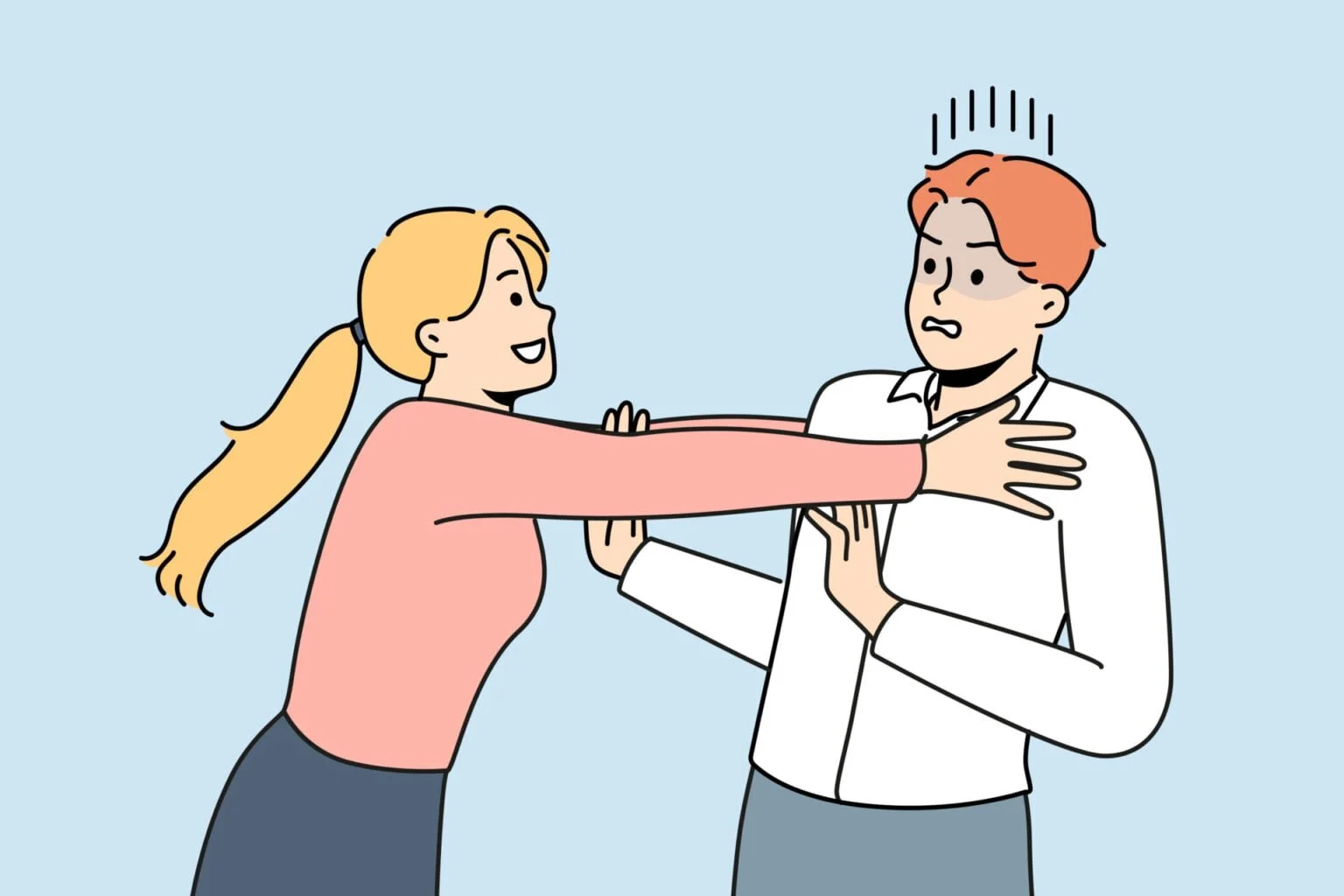
In a relationship where both the anxious and avoidant attachment styles are present, there is a repeating ‘push-pull’ cycle where the anxiously attached individual seeks reassurance while the avoidant individual retreats to protect their independence. Because this is the same pattern that shaped them in childhood, each person’s relational coping mechanism triggers the other, and while this causes intense intrigue, both ultimately feel unsafe.
The anxiously attached individual will feel like they are never enough and fear abandonment. The person with the avoidant attachment style will fear entrapment or loss of identity. Yet despite the fear, the attraction can feel magnetic – because their nervous system recognizes the pattern. The ‘relational dance’ repeats the pattern that shaped their earliest experiences of love:
The anxiously attached learned to chase, cling, and prove their worth. The avoidantly attached learned to shut down, escape, and dissociate in order to survive what was overwhelming.
Childhood attachment wounds and The Adult Chair
Through the Adult Chair lens, both the anxious and avoidant attachment styles represent two different protective strategies responding to the same underlying human need of wanting to feel safe, loved, and connected. Healing begins when we reconnect with our emotional needs, acknowledge the invisible wound, and compassionately reparent ourselves – and the Adult Chair Framework offers this type of path forward.
Anxious attachment
Relational tension can provoke the Inner Adolescent to try to secure the connection by moving toward it in order to fix it through people pleasing, rescuing, or codependency. They may struggle with getting caught up in what the relational narrative or dynamic ‘should’ be, and, consequently, struggle with impulsive reactions and obsessive ruminating. Beneath these protective responses is often an Inner Child longing to feel safe, chosen, and loved.
Avoidant attachment
The protective response for someone with an avoidant attachment is to neutralize the relational tension by moving away from connection. Their Inner Adolescent may find comfort in withdrawing, shutting down, suppressing or dismissing difficult emotions, or even creating physical distance – especially if vulnerability feels ‘unsafe.’ While this response pattern may seem like indifference, it is often an attempt to protect their wounded Inner Child from the pain or rejection and disappointment.
BOTH
Although these response patterns can look like opposing strategies, they share a similar motivation. Both desire to feel safe connection. Both are adamantly determined to protect the wounded Inner Child – even if that means putting on the survivor mask and attempting to control the narrative when triggered.
To create a new dynamic, one where the patient, compassionate, courageous Healthy Adult can step in, we need to draw conscious awareness to the hurt Inner child behind the protective Inner Adolescent
How to work through the anxious-avoidant dynamic
Attachment styles and relational dynamics are not fixed, and through conscious living, attunement, and healthy adult compassion, healing is possible. The anxious can learn to stop proving their worth and chasing after a love they could never secure. And the avoidant can learn to stop protecting themselves with distance and running from the closeness they never felt safe to trust.
How to heal an anxious-avoidant attachment dynamic in a relationship

Healing an anxious-avoidant attachment dynamic requires both partners being aware of their triggers and making a joint decision to regulate their nervous systems – individually and then together. Making the shift from reactive habits to intentional communication can be difficult, but through the power of compassionate awareness, it is possible for both individuals to respect boundaries, interrupt the cycle, and forge a new path forward.
Instead of push-pull, there needs to be a joint effort of give-and-take. The anxious person needs to honor the avoidant individual’s need for space and self-regulation, and the avoidant person needs to learn how to stay present without dissociating or shutting down. Through patience, practice, and, if necessary, attachment-based therapy or coaching, couples can cultivate safe vulnerability and emotional security.
5 Tips for navigating the anxious attachment style
Practice awareness – Breaking free from the anxious-avoidant cycles requires awareness. When you recognize patterns and triggers, slow down. Tune inward and practice emotional regulation.
Invite a somatic pause - Instead of reacting immediately, take a deep breath and wait. Relational security is not something that can be urgently rushed, and authentic, healthy, secure connections require patience.
Challenge assumptions – Challenge the narrative by separating fact from fiction. Allow space for alternative explanations to exist.
Cultivate internal self-worth – Shift your focus from external to internal validation and build an independent sense of self-worth.
Choose communication over pursuit – Instead of protesting behaviors, lashing out, passive-aggressive pressure, icing out, or threatening, state your need vulnerably using “I” statements.
5 Tips for navigating the avoidant attachment style

Recognize the pattern – Notice when you physically or emotionally pull away or feel the urge to pull away.
Communicate your need for space – Disappearing without explanation erodes trust. If you need space, set a clear time frame by communicating your need for space and the expectation for your return.
Regulate your nervous system – When emotional closeness feels threatening, ground yourself in the present moment through deep breathing and mindfulness tools which can help calm the fight-or-flight response that triggers withdrawal.
Offer yourself compassion – Acknowledge that avoidant habits were once useful survival responses and protective strategies. Be kind to yourself as you replace harsh self-criticism with healthy, affirming thoughts.
Practice small doses of vulnerability – Prioritize showing up honestly and authentically. Share minor, real updates about your day or feelings with a trusted person instead of standard “I’m fine” responses. Build your tolerance for emotional exposure by extending moments of connection, even if it’s just a few seconds at a time.
Learn more: Fight fair – How to manage conflict in a relationship
In relationships, the goal is not to aggressively avoid or pursue the other. Healing comes not from controlling the wounded narrative, but from turning inward and practicing attunement. Ultimately, as we learn to reparent ourselves and create secure attachment within ourselves, we become increasingly capable of creating healthier, more secure attachment with others.
The bottom line
Healing wounded relational dynamics and attachment styles can be messy and complex, as navigating triggers with the person who caused them often creates challenges in attempting to repair. Having the help of an emotionally secure therapist or coach can be highly beneficial. If you’re interested in exploring a grounded approach to healing from an insecure attachment style, I invite you to reach out and schedule a complimentary 20-minute discovery call. This no-obligation, zero pressure time allows us to meet, get your questions answered, and determine if working together is the next right step for you.
Let’s Connect
Hi there! I’m Jenny Jansen, a Licensed Therapist (LISW-CP) and Certified Adult Chair Master Coach based in South Carolina with over 10 years of experience. License number: 11692 I combine both therapy and coaching methodologies to provide my clients with a holistic perspective and the techniques they need to flourish. Rediscovering who you were always meant to be is an act of courage, and radical self-love can turn unconscious paralysis into conscious, authentic growth. Learn more about me here.