There may be countless reasons to walk away. If the job is infuriating, the relationship disappointing, the system not working, the situation unsalvageable… the compulsion to be like Elsa and just ‘let it go’ can feel empowering, healthy, or even necessary. And to be fair, there is absolutely a time to let it go. But we can’t ‘call it’ and quit just because something is hard… because, we can do hard things.
Letting go is not always the most aligned choice, but sometimes it is. The truth is there’s a time to fight and a time to surrender. A time to dig your heels in and stay, and a time to say goodbye. But whether you decide to wage war against the odds or accept the unwanted-but-real reality, both choices have a cost.
If you’re struggling at a crossroads wondering if you should hold on with hope or release with peace… friend, this blog is for you.
What ‘letting go’ actually means (and doesn’t mean)
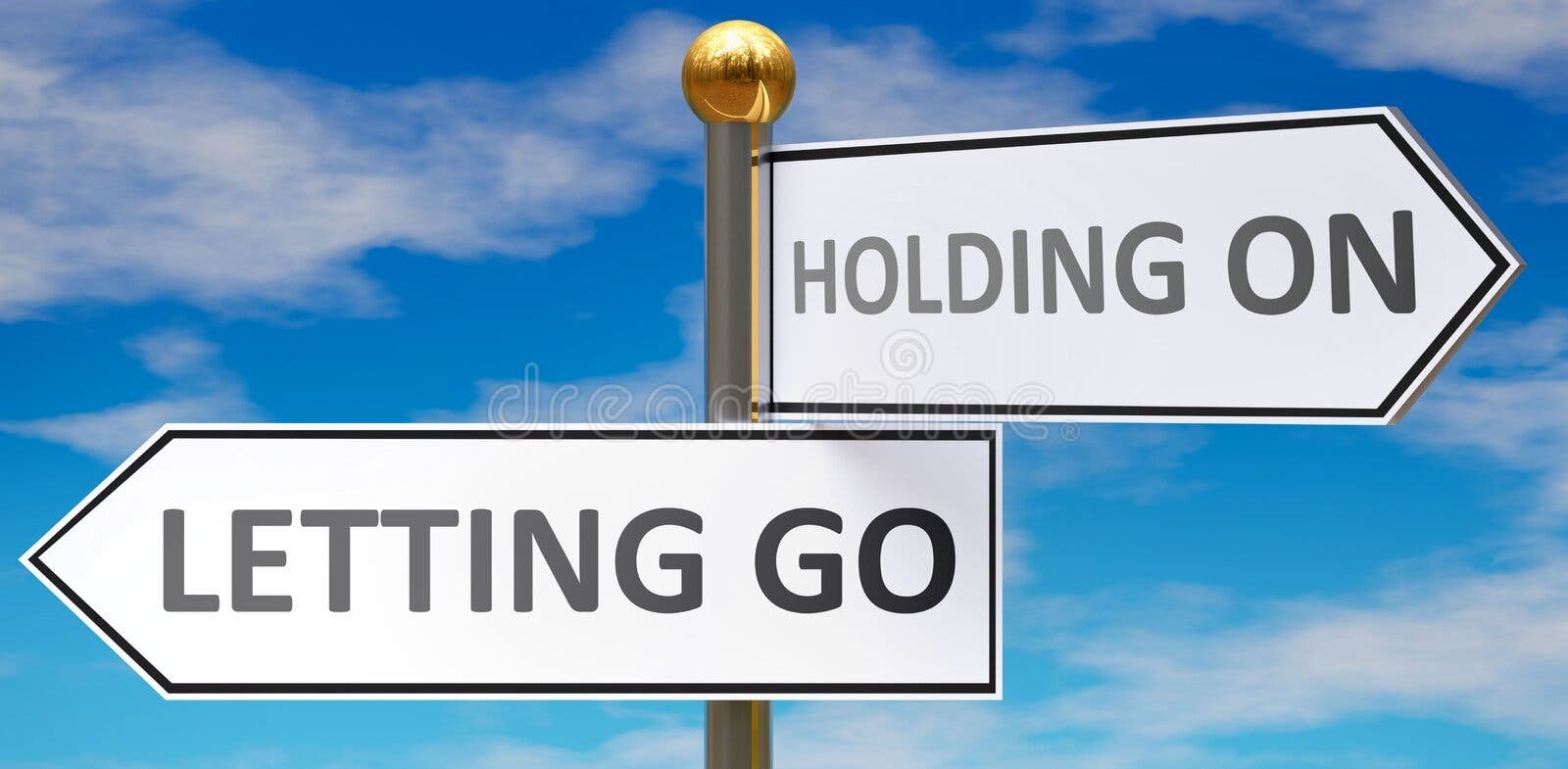
‘Letting go’ means you are admitting something is beyond your control and acknowledging reality as it is – not because you like or approve it, but because you’re choosing to trust what comes next rather than forcing a particular outcome. To this end, grief is absolutely part of the process, because letting go may involve mourning a person, relationship, dream, identify, expected future, or time spent believing something different was possible.
Letting go is not the same as quitting, and it does not mean you are ‘giving up’ on hope. Hope is not the problem here, and you can absolutely ‘let go’ while still holding space for hope. The problem is when hope becomes disconnected from evidence, clinging to a ‘hopeful-potential’ can become a way of avoiding reality.
3 Common reasons why we hold on
Holding on is not always a conscious choice. As humans, we’re hardwired to cling to whatever feels safe and familiar – even when it no longer serves us. Even when reality provides loads of evidence that the season is shifting. There are three primary reasons why we keep holding on.

Loyalty or obligation to an attachment, identity, or belief. We often keep holding on because of our attachments to identities, roles, attitudes, beliefs, and expectations about who we ‘should’ be and how we ‘should’ feel. When a particular identity or belief becomes tied to what we do and how we respond, major life transitions can leave us wondering who we are without that label as our compass.
Fear of change. Change, especially unwanted or painful change, often carries with it a sense of fear, grief, and uncertainty. And if family ties, career choices, or beliefs about what we ‘should’ do get in the way, the impulse to resist change is even stronger.
Not being emotionally or practically ready. Sometimes we keep holding on because emotionally, we’re just not ready. And logistically, sometimes circumstances need to change first before ‘letting go’ is even a practical option.
When holding on is worth it vs. when it costs us too much
It may be worth holding on in hope for a future potential, but if hope isn’t grounded in truth or reality, it can become a delusion, separation, or avoidance from the reality at hand. Which begs the question:
How do we hope for change while remaining honest about what is happening right now in the messy middle?

Letting go may be healthier if:
We’re grasping at straws, making excuses, or continually justifying what isn’t working.
We’re merely tolerating the situation or feel resigned to it.
Maintaining it requires abandoning our needs, values, boundaries, or sense of self.
We’re only staying/maintaining the situation because we feel like we have to, need to, or should – or because we’re afraid of what happens if we leave or acknowledge the reality of a situation.
Holding on may be worthwhile when:
Our values are in alignment with the effort.
The problem or situation is realistically solvable (through mutual effort in relationship, or in a genuine commitment to change, or via a productive path forward).
We can identify real evidence of progress and take actionable steps toward improvement
Staying or holding on feels like a conscious choice aligned with what we genuinely want, rather than something we feel obligated to do.
The key distinction and core question is this: Are you consciously choosing to stay or hold on? Or do you feel unable to leave or let go? For many of us, the tension in this question lies in the conflict between potential and fantasy.
Potential vs Fantasy – What is happening vs what could happen

Potential is a desired outcome supported by evidence, workable conditions, and actionable, solution-driven steps. Fantasy is an imagined future our outcome often focused on to avoid accepting an unwanted present reality.
When we’re standing at a crossroads wondering what to do, it’s helpful to discern whether what we’re holding on to is potential or fantasy. Are we moving in alignment toward a realistic possibility? Or are we just using an unlikely, imagined future to avoid the present reality?
The cost of holding on vs the cost of letting go
Either way, both choices come with a cost

Letting go may bring hidden grief, uncertainty, loneliness, disappointment, fear of failure, or feeling a lost sense of identity. Holding on may offer familiarity and hope, but it can also prolong suffering, consume energy, and disconnect us from our present lives by keeping us stuck in the past or future. I think the greatest cost of holding on might be self-abandonment – betraying our own realistic needs, boundaries, or values to preserves something that no longer aligns with who we are.
Again, there’s so much nuance here, but ultimately, the difference comes down to choosing to stay and hold on vs feeling like you ‘should’ stay and hold on.
The Adult Chair: Understanding what keeps us stuck
And how to return to full, conscious alignment
When facing a crossroads, every part of who we are snaps to attention and each of our three voices has something to say.

Child Chair: Our Inner Child fears abandonment, rejection, loneliness, and loss of safety. They absorb experiences as truth and lack the discernment to recognize what is or isn’t healthy. They say, “Please don’t leave me.”
Adolescent Chair: Our Inner Adolescent is determined. They’re willing to prove, bargain, people-please, and over-function if that’s what it takes to 'hold on' and protect the Inner Child. The Inner Adolescent says, “Who do I have to be to make this work?” On the flipside, the Adolescent may also be the first to 'let go' in an impulsive, throw-in-the-towel kind of way to avoid the pain of being rejected or abandoned.
Adult Chair: Grounded in discernment, reality-based choices, and the ability to feel difficult emotions without numbing or avoiding them, the Healthy Adult can acknowledge grief, fear, disappointment, love, and longing while evaluating all the available choices. And with this wisdom, the Healthy Adult says, “I will do the next right thing, even if it’s hard.” Or, “I will respond in a way that aligns with my core values.” Or, “Letting go can be an act of compassion rather than evidence of failure.”
Learn more about the Adult Chair framework.
How to know when it’s time to let go
Reflection questions – Check in with yourself through attunement
Whether you’re holding on to grief, a loved one, a relationship, an identity, a career, or a dream… how do you know when it’s time to release in peace? There is no easy answer. But here are a few reflection questions to help guide you:

Am I holding on to this because I genuinely want to? Or because I’m afraid to leave?
Is there any evidence to support the change I’m hoping for? Is there mutual effort, collective cooperation, or a realistic path forward?
What am I tolerating, sacrificing, or abandoning to keep this going?
Am I attached to what is happening now? Or to what I wish were happening?
Am I clinging to this out of fear of what letting go would say about me?
What would acceptance look like if it didn’t mean approval, failure, or giving up?
What might become possible if I released the belief, role, relationships, or expectation I’m holding on to?
The bottom line
Sometimes, continuing to press on in hope is helpful. Other times it can prevent us from acknowledging what is really happening. If you need help navigating a threshold moment of change in your life, please consider reaching out. As attachment-based therapist and Adult Chair Master Coach, helping clients navigate painful crossroad decisions with clarity and compassion is what I love to do. Certain moments in life can be so hard, and having a grounded, therapeutic relationship with someone who ‘gets it’ can help you respond both with hope and honesty.
If you’re interested, I invite you to reach out and schedule a complimentary 20-minute discovery call. This no-obligation, zero pressure time allows us to meet, get your questions answered, and determine if working together is the next right step for you.
Let’s Connect
Hi there! I’m Jenny Jansen, a Licensed Therapist (LISW-CP) and Certified Adult Chair Master Coach based in South Carolina with over 10 years of experience. License number: 11692 I combine both therapy and coaching methodologies to provide my clients with a holistic perspective and the techniques they need to flourish. Rediscovering who you were always meant to be is an act of courage, and radical self-love can turn unconscious paralysis into conscious, authentic growth. Learn more about me here.