
High-functioning depression & anxiety - The hidden struggle of ‘holding it together’

Maybe you’re the achiever. The one who ‘gets stuff done.’ Or maybe you’re the ‘fun one’ who brings the good vibes. However you arrive, whenever you do show up, you perform. You play your role and hold it together for everyone. You know you look like you’re functioning well, and maybe you’re even successful. But on the inside, things are heavy. Exhausting. And if we’re being perfectly honest? Despite your external demeanor, you may feel downright overwhelmed.
High-functioning depression and anxiety are often overlooked, not because they aren’t serious (they very much are), but because they don’t fit the image we’ve been taught to recognize as “struggling.” And in a culture that rewards productivity and appearance over emotional truth, many people learn to survive from anything but their Healthy Adult.
Here’s the truth. You can be struggling – seriously, severely struggling – and not look like it at all. It’s called “high-functioning depression and anxiety.” Let’s talk about it…
What is high-functioning depression and anxiety?
High-functioning depression and anxiety may not be official DSM-5 clinical diagnoses, but they are a very real lived experience. The phrase describes people who continue to work, maintain relationships, and meet expectations all while quietly battling persistent low mood, anxiety, fatigue, or emotional numbness. A key defining aspect of HF depression and anxiety is that suffering is internal and often invisible.
High-functioning depression and anxiety are so much more than ‘feeling stressed.’ They are legitimate ways depression and anxiety sometimes manifest. High-functioning depression and anxiety is a valid, often debilitating condition that can significantly impact a person’s life and often requires professional support.
High-functioning vs. clinical depression and anxiety
When we think of clinical depression, we often picture someone unable to get out of bed, deeply withdrawn, or visibly hopeless. And with clinical anxiety we usually imagine someone with panic attacks, avoidant tendencies, or a constant fear. But high-functioning anxiety and depression show this isn’t always the case.

High-functioning depression may look like:
Chronic exhaustion
Emotional flatness or quiet sadness
Going through the motions without joy
Self-criticism masked as “motivation”
…all while performing well and maintaining the appearance of healthy and successful.
High-functioning anxiety may look like:
Perfectionism and over-preparation
Constant inner worry
Needing reassurance
Physical tension or restlessness
…even if no one else can see it.
Individuals with high-functioning depression and anxiety often embody the persona of someone who has it all together… but they quietly, internally suffer.
Looking through the eyes of the Healthy Adult
From the Adult Chair perspective, high-functioning depression and anxiety often look like an overreliance on adapted parts (the pleaser, the perfectionist, the over-doer) rather than from the grounded, self-compassionate Healthy Adult. It feels like living in survival mode, all while keeping up the appearances of living in your ‘thriving era.’
You may look like a Healthy Adult on the outside, but if you feel like an adolescent who is exhausted from living in survival mode, but please know… You’re not broken. You’re coping. And this type of coping isn’t sustainable.
High functioning depression and anxiety is the “new normal”
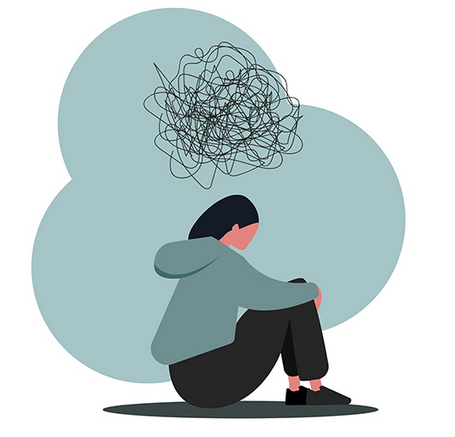
… and it isn’t healthy. At all. We live in a culture that normalizes emotional disconnection, disregards anxiety, and rewards burnout. It’s totally toxic, but people often bond over exhaustion. We glamorize running on little sleep and often fall into the trap of equating our worth with productivity and resilience. Somehow, the general population decided ‘everyone feels this way,’ and that became a reason to not listen to ourselves.
But our worth is not determined by how much we can endure. Pain is not a contest, and if you have to disconnect just to get by, then something isn’t right. If tuning into triggers creates overwhelm, then your inner honesty is speaking its truth and crying out for help.
Understanding the impact of high-functioning depression and anxiety
How we learn to invalidate ourselves
When high-functioning anxiety and depression become the new baseline, we lose touch with what emotional health actually feels like. From this emotionally detached state, we remain busy, overbooked, and trapped. This perpetual cycle of burnout is so culturally accepted, expected, and normalized that in order to cope, we often minimize the reality of our own lived experience by…

Internalizing
We may tell ourselves we can push through if we just ‘try harder’ or ‘be more grateful.’ But this is the inner critic taking over. This is us turning inward and heaping more perfectionist pressure on ourselves instead of tuning in and acknowledging the unmet needs worthy of our attention. Read more: Why your emotions matter & how to process emotions in a healthy wayComparing and masking
We might discount our pain by comparing our situation to someone else who ‘has it worse’ and conclude our pain is not as valid. For so many of us, it can feel easier to just keep smiling, keep performing, and keep quiet – rather than admit things are not ok. Read more: Hidden grief – What it is, where it hides, and how to healDenial and suppression
Sometimes, we’re determined to believe, ‘I’m fine.’ Not because it’s true but because we’re so familiar with the frantic speed of ‘busy’ that slowing down feels unsafe. There may even be a subconscious fear of wondering ‘who we are’ if we’re not accomplishing things, being productive, or keeping up appearances. Read more: How to heal the wounded self
Friend, these strategies are often survival skills your Inner Adolescent learned when they were just trying to cope… and while these strategies may keep you ‘functioning,’ they don’t create healing, emotional health, or true happiness.
Signs high-functioning depression or anxiety may be affecting you
Here are some gentle, Healthy Adult check-in questions to ask yourself:

Do you feel emotionally tired even when things are ‘going well’?
Do you rely on busyness, control, or perfectionism to feel okay?
Do you struggle to rest without guilt?
Do you feel disconnected from joy, creativity, or an internal sense of calm?
Do you cope through overworking, overthinking, numbing, or self-criticism?
If so, then these may be signs your nervous system needs support.
In summary – The bottom line
High-functioning doesn’t mean healthy, and coping isn’t the same as living from your Healthy Adult. Healing happens when we slow down and practice attunement by listening to our emotional needs through the mind-body connection. When we learn to meet ourselves honestly, without judgment or comparison, we create space for real peace and real change.
Friends, there are so many reasons why asking for help can be so hard – especially for people who are struggling with high-functioning depression and anxiety. If you’re busy holding it all together then you may not feel like you have time to pursue professional mental health support. But high-functioning depression and anxiety is a very serious condition, and you deserve more than just ‘getting by.’
Trauma-informed therapy and Adult Chair coaching have proven to be highly effective at helping exhausted, burned out, stressed out, quietly overwhelmed individuals come out of survival mode and into a more grounded, connected way of living.
You’re not alone
If any of this resonated with you, please don’t struggle in silence. Please consider making the Healthy Adult decision to book an appointment today to begin reconnecting with yourself from the inside out. I help individuals come out of survival mode and embrace authentic alignment in a way that is supportive, grounded, and sustainable. Please contact me to learn more or book a discovery call now.
Let’s Connect
Hi there! I’m Jenny, a licensed Holistic Therapist (LISW-CP), and Certified Adult Chair® Master Coach.
I combine both therapy and coaching methodologies to provide my clients with a holistic perspective and the techniques they need to flourish. Rediscovering who you were always meant to be is an act of courage, and radical self-love can turn unconscious paralysis into conscious, authentic growth. Learn more about me here.